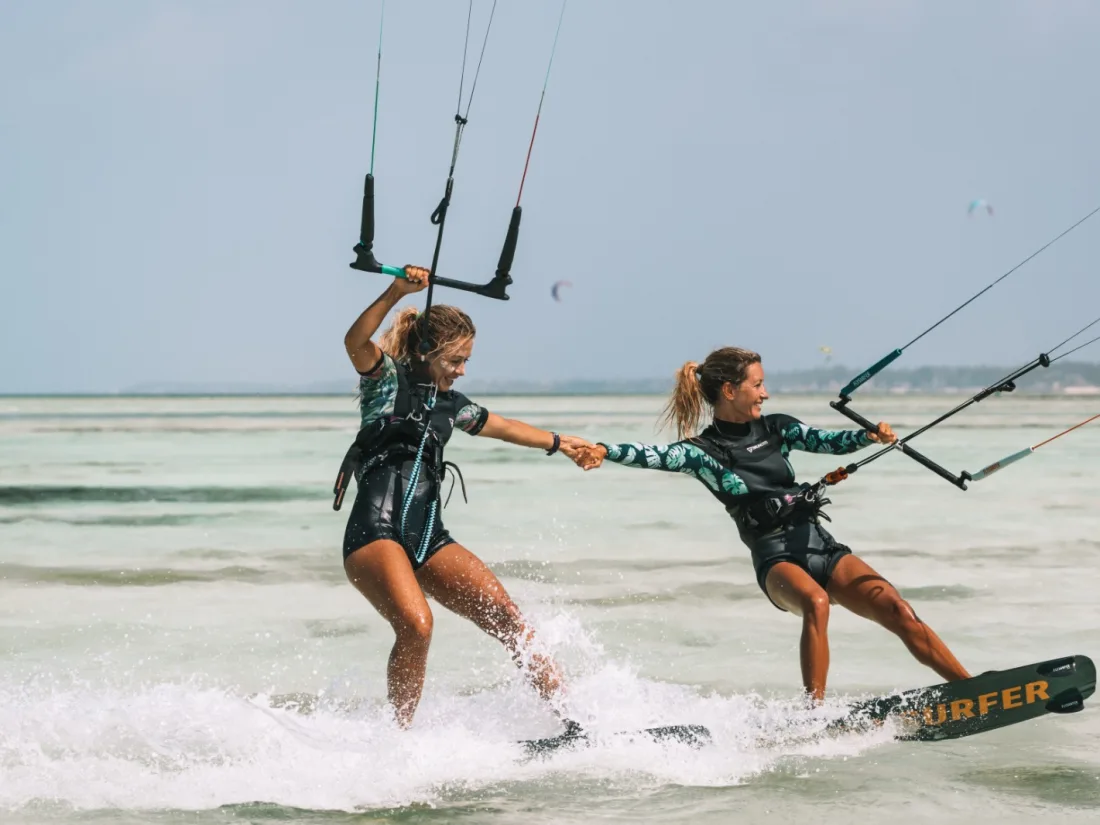
Paje is not a pretty catalogue spot. It is the kite spot in Zanzibar. The east coast of the island faces the Indian Ocean trade winds head-on — in July they roll in at 22–30 knots, clean, for weeks on end. If you have ever seen a photo of a kiter launching 12 metres above a turquoise lagoon, there is a 60% chance it was taken in Paje.
Two windows, two winds
Zanzibar has two serious wind seasons:
- Kusi (June–September) — the southern monsoon. Side-onshore wind at 18–30 knots, almost every day. Dry season, pleasant temperatures, water at 25–26°. The golden window for intermediates and advanced riders.
- Kaskazi (December–February) — the northern monsoon. Warmer and less consistent wind (14–22 knots), but the water sits at 28–29° and the sky stays dry. Better for beginners and mid-level riders who want to mix kite sessions with days off.
March–May is the long rainy season (Masika): there are good days and flat days, rain comes hard and fast, the lagoon fills with seaweed and the school closes. It is not the season to come for kite. October–November (Vuli) is the short rainy season — more viable, but less predictable than Kusi or Kaskazi.
Why Paje and not somewhere else on the coast
Paje combines three things that very few spots in the world can offer together:
- A kilometre-wide tidal lagoon. At low tide the lagoon empties and leaves a natural pool 1.5 km across with less than a metre of water. Learning here or practising tricks is pure physics — you fall and land on your feet. At high tide the water rises and opens the blue wall where the swell breaks.
- Clean wind, no shadows. No tall buildings, no mountains, no barrier islands to cut the flow. The entire Indian Ocean blows straight into your face.
- A density of professional schools. There are 8–10 serious schools within 2 km of beach. IKO- and VDWS-certified instructors, fresh equipment every year, rescue boats. This is not Vietnam or the Dominican Republic — it is the most established professional kite ecosystem in East Africa.
Your first day (if you have never kited before)
The beginner course is three days, nine hours in total. Day 1: playing with the kite on the sand and understanding the wind window. Day 2: bodydrag — the wind pulls you, no board yet. Day 3: getting the board on and starting waterstarts. By day four you are riding short reaches. No miracles — but the low-tide lagoon is the closest thing to a miracle you will find: you fall and put your feet on the bottom.
Come for a full week (5–7 days of lessons) and you will leave riding. Come for ten days and you will leave throwing your first clumsy jumps.
If you are already an independent rider
Hire gear from the school (kite + board + harness + impact vest). A week runs around 350–450 USD depending on the brand. Come to the beach, rig up, and go. The school has a safety camera and a rescue boat on standby at all times in case things go wrong — a broken line, a runaway kite.
For tricks: low tide, lagoon wall on the reef side. For airtime: high tide, facing the reef break (watch the lateral current).
When NOT to come for kite
This is the section you will not find in any brochure:
- April. Peak of the long rainy season. Winds are weak and unstable. The school closes for two weeks.
- Mid-November. The monsoon transition. Windless days or erratic gusts. The water is warm and beautiful, but it is not kite season.
- If you are counting on guaranteed wind during Kaskazi. The northern monsoon is less reliable than the southern one. Some years it delivers 25 straight days at 22 knots; other years it brings 10 flat days. If you come in January, have a plan B ready — snorkelling at Mnemba, Stone Town, Jozani.
From MONEA El Nido
We are right on the beach, 80 metres from the schools. You wake up, have breakfast, look at the horizon, watch the wind coming in — and you are rigged and flying in under ten minutes. We have an arrangement with the neighbouring school to priority-rig for our guests, no queuing, and we run a beach lunch service between sessions so you never have to get dressed and walk back.
If you are coming for 7–14 days of kite, let us know when you book and we will put you in Tree House — higher elevation, cleaner wind on the terrace and a direct view of the lagoon to check conditions from your bed.
Quick summary: Kusi (Jul–Sep) is the premium window. Kaskazi (Dec–Feb) if you want to mix kite with cultural tourism. Beginner course from 280 USD over 3 days. Equipment hire from 350–450 USD per week. Save the transfer cost by booking with us — includes airport pickup and a ride to the school on day one. See experiences and pricing →